
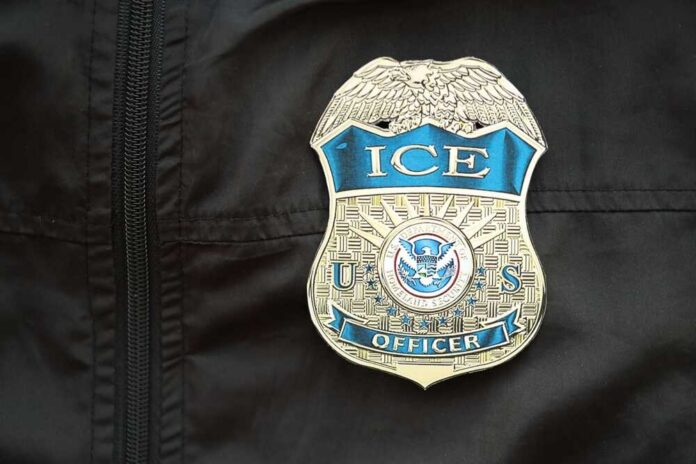
An Immigration and Customs Enforcement officer now faces six federal counts for allegedly lying to the Federal Bureau of Investigation about a Minneapolis shooting—and he walked into federal custody himself.
Story Snapshot
- A grand jury indicted Christian Castro on six false-statement counts tied to a Jan. 14 interview with the FBI.
- Prosecutors say Castro’s account of a violent struggle does not match evidence they reviewed.
- Castro turned himself in and later pleaded not guilty to the federal charges.
- Separate Minnesota charges over the shooting remain active and on a different track.
What Prosecutors Say Happened And Why It Matters
The United States Department of Justice said a federal grand jury returned a six-count indictment against Christian Jeremiah Castro, 52, for making materially false statements to the Federal Bureau of Investigation during a January 14 interview about the Minneapolis shooting of Julio Cesar Sosa-Celis.
Prosecutors describe a detailed set of claims they say are false. They argue Castro’s version of a prolonged brawl does not line up with the record investigators assembled. That clash—between words and evidence—is the heart of this case.
An ICE agent who is accused of shooting a Venezuelan man in Minneapolis in January and then lying about the incident was charged by the Justice Department for allegedly making false statements to investigators, sources familiar with the matter said. https://t.co/WcOMI9YFkb
— ABC News (@ABC) September 6, 2026
Federal false-statement cases turn on proof that the speaker knew the truth and chose to tell a different story to federal agents. The Justice Department’s own manual stresses that 18 U.S.C. Section 1001 targets intentional lies to investigators, whether or not an oath was given.
That is why the government often charges a false statement even when disputes about force remain unresolved. Deception to federal agents is its own crime, with its own stakes.
Two Tracks: The Shooting Case And The Lying Case
Hennepin County prosecutors earlier filed state charges tied to the nonfatal shooting, including four counts of second-degree assault and one count of falsely reporting a crime. Those charges focus on whether the force used was lawful.
The federal case focuses on what Castro told the Federal Bureau of Investigation about that force. These tracks will run on different calendars, with different elements to prove, and different outcomes possible in each courtroom. One can fail while the other stands.
Police must enforce the law, and the law must also enforce honesty. Public safety breaks when reports cannot be trusted.
Most officers tell the truth, even under pressure. When an officer is accused of lying, the system must test that claim in court. A fair trial protects the innocent and warns the dishonest. That balance serves communities and rank-and-file agents who do the job right.
The Defense Position And The Burden Of Proof
Castro surrendered to authorities and pleaded not guilty to the federal charges, signaling he intends to fight the indictment. A plea is not proof. The government must show he knowingly made false, material statements to federal agents.
Jurors will weigh recorded evidence, witness accounts, and any contradictions that matter to the interview claims. If the evidence leaves reasonable doubt, he walks. If it convinces beyond a reasonable doubt, he faces felony penalties under Section 1001.
Federal prosecutors rarely bring a false-statement case unless they believe the record is tight. They filed after state charges were already pending, and after a grand jury heard the facts and returned the indictment.
That sequence suggests the federal case centers on specific statements in a specific interview, not a vague dispute about tactics. The sharper the focus, the more this turns on whether the paper, video, and timelines square with what Castro told investigators.
Sources:
apnews.com, justice.gov, nbcnews.com, politico.com, fox9.com, reuters.com