
Wall Street strategists have identified a historically flawless recession indicator that just flashed red, raising alarm bells for American families already squeezed by high energy costs and lingering inflation from years of mismanagement.
Story Snapshot
- Unemployment chart with 100% recession track record since 1950 triggers warning as jobless rate crosses three-year moving average
- Prediction markets now price 35-36% chance of recession by end of 2026 despite Wall Street banks forecasting continued growth
- Labor market shows troubling cracks with sluggish hiring and declining job openings even as GDP and spending remain resilient
- Inflation forecast to spike again to 3.6% by mid-2026 from tariffs and fiscal policy shifts, hitting household budgets hard
Historical Recession Signal Flashes Warning
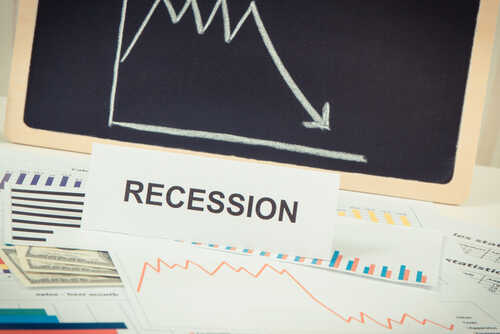
Société Générale strategist Albert Edwards published a client note highlighting an unemployment chart that has preceded every US recession since 1950 with perfect accuracy.
The indicator tracks when the unemployment rate crosses above its three-year moving average, a threshold recently breached in early 2026.
Edwards warns that this pattern represents the biggest threat to equity markets, particularly concerning for Americans whose retirement accounts and savings depend on market stability.
The chart’s unblemished track record across eight previous recessions makes it impossible for prudent investors to ignore, even as some Wall Street firms maintain optimistic outlooks.
Goldman Sachs just raised US recession odds to 30%, the third bump in 90 days.
Growth is slipping below potential, oil is stuck around crisis levels, and credit is tightening into a weakening jobs market.
This is what the start of a recession actually looks like in real time.…
— StockMarket.News (@_Investinq) March 24, 2026
Mixed Economic Signals Create Uncertainty
The US economy presents a confusing picture as 2026 unfolds, with unemployment at 4.6% as of November 2025 and inflation at 2.7%, resulting in a misery index below 76% of readings over the past fifty years.
Yet beneath these surface numbers, hiring has stalled, and job openings have dried up, classic early warning signs that working Americans feel in their communities.
Adding to the uncertainty, data distortions from the 2025 fiscal and tariff policy changes cloud the true state of the economy, making it harder for families and small business owners to plan ahead.
The divergence between resilient consumer spending and weakening labor markets echoes conditions that preceded past downturns.
Wall Street Remains Divided on Outlook
Major financial institutions offer sharply conflicting forecasts for 2026, reflecting genuine uncertainty about the economy’s trajectory. J.P. Morgan Asset Management projects 2.2% GDP growth without a recession, while Goldman Sachs predicts a sturdy 2.8% global growth rate with US outperformance.
In contrast, Edwards’ recession warning and Polymarket’s 35-36% odds reflect bearish sentiment among traders and some strategists. The Federal Reserve plans modest rate cuts totaling 50 basis points, though J.P.
Morgan expects inflation to jump to 3.6% by mid-2026, then settle at 2.2%, meaning Americans will face another round of price increases at the pump and grocery store just as memories of the last inflation surge fade.
False Signals Complicate the Picture
The Sahm Rule, another historically reliable recession indicator formalized in 2019, issued a false positive in August 2024 when the three-month average unemployment rate rose more than 0.5% from its twelve-month low, without a subsequent recession.
This broken streak introduces doubt about whether historical patterns still hold in an economy reshaped by pandemic disruptions, massive government spending, and unconventional policy interventions.
For everyday Americans watching their budgets tighten and job security questions mount, the conflicting signals from experts offer little comfort or clarity about whether to brace for harder times ahead or trust that growth will continue.
Recession odds climb on Wall Street as economy shows cracks beneath the surface. The economy last year lost more than half a million jobs excluding health care. https://t.co/EtRBaEwfsx
— Jeff Cox (@JeffCoxCNBCcom) March 25, 2026
The labor market weakness and climbing recession odds come at a particularly frustrating time for Trump supporters who expected their president to deliver stable prosperity and keep America out of costly foreign entanglements.
Whether the unemployment chart’s perfect record holds or joins the Sahm Rule as another broken indicator remains to be seen, but American families deserve straight answers and sound economic stewardship, not more Washington guesswork.
Sources:
One Chart Shows Why a Recession Could Still Be in the Cards in 2026
US Recession by End of 2026 – Polymarket
A Baseline Forecast for 2026 – J.P. Morgan Asset Management