

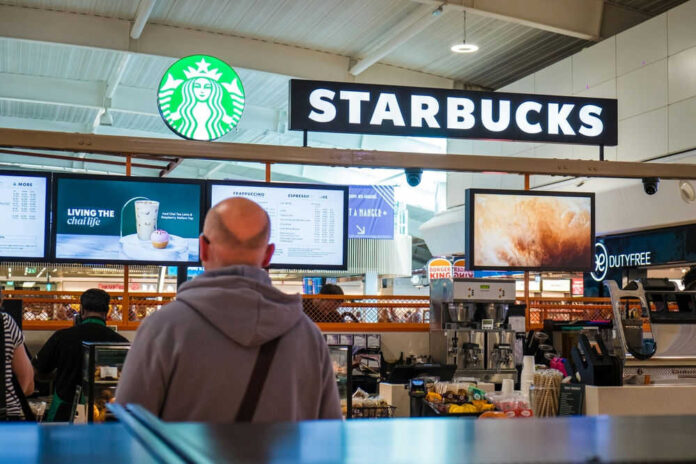
Starbucks faces a wave of lawsuits as workers demand reimbursement for new dress code requirements, spotlighting state laws and the rights of American employees.
Story Snapshot
- Starbucks workers in Illinois, Colorado, and California sue over out-of-pocket costs for new company-mandated attire.
- Lawsuits allege violations of state labor laws requiring employer reimbursement for work expenses.
- Unionization momentum intensifies as legal action highlights broader labor disputes.
- Potential precedents could affect dress code and reimbursement policies in other industries.
State Laws at Center of Starbucks Dress Code Lawsuits
Starbucks employees in Illinois, Colorado, and California initiated class-action lawsuits and formal complaints against the company, arguing that its new dress code imposed significant financial burdens without mandated reimbursement.
The policy, enforced company-wide on May 12, 2025, requires workers to wear solid black shirts, specific pants or dresses, and waterproof shoes.
Employees report spending $60 to over $100 on compliant clothing, which Starbucks declined to reimburse, despite state laws obligating employers to cover necessary work expenses.
Starbucks workers sue over company's new dress code's costs to them https://t.co/zxL8KRsi1B
— DailySprint (@DailySprint) September 18, 2025
These legal actions are supported by Starbucks Workers United, the union driving organizing efforts since 2021.
The coordinated lawsuits leverage state-specific reimbursement statutes rather than federal law, reflecting a targeted legal strategy. California, Colorado, and Illinois have clear regulations mandating employer reimbursement for required uniforms and gear.
Starbucks provided only two free T-shirts to each worker, leaving them responsible for all remaining attire costs.
With over 640 unionized stores out of 10,000 nationwide, union advocates view this case as a critical opportunity to strengthen labor protections and set enforceable precedents.
Unionization and Corporate Power Dynamics
Starbucks’ move to implement a stricter, standardized dress code comes amid rising union activism and a contentious labor climate. Workers, many of whom live paycheck to paycheck, voiced frustration over forced expenses and perceived corporate indifference.
Plaintiff Brooke Allen characterized the policy as “tone deaf,” emphasizing the financial strain on low-wage employees.
Starbucks Workers United continues to support legal challenges, aiming to advance worker rights and press for broader changes in company policy. The lawsuits are in early stages, with California’s labor agency reviewing the case and potential escalation to a class-action suit if initial penalties are declined.
Historically, Starbucks allowed greater employee self-expression, with colorful shirts and visible piercings. The new uniform mandate represents a marked shift toward brand uniformity, raising questions about worker autonomy and workplace culture.
Previous incidents, such as Starbucks being ordered to pay $50 million in damages for unrelated workplace safety violations in March 2025, have heightened scrutiny of the company’s employment practices.
The outcome of these lawsuits could prompt other corporations to reevaluate dress code policies and expense reimbursement protocols.
Broader Implications for Service Workers and Employers
Legal experts note that state labor laws in the three states generally require reimbursement for all necessary business expenses, including attire demanded by employers.
Some argue that Starbucks’ provision of two shirts is insufficient under these statutes, as employees must purchase additional items to comply.
If the lawsuits are successful, they could set influential precedents, compelling companies in diverse sectors to cover employee expenses and restrict unilateral policy changes that burden workers.
The litigation also highlights the increasing power of unions and the shifting balance between corporate interests and individual rights.
In the short term, impacted Starbucks workers face financial stress and uncertainty, while the company confronts legal and reputational risks. In the long term, the cases may drive policy changes, inspire similar claims, and reinforce state-level protections.
With worker morale, self-expression, and workplace culture at stake, these lawsuits embody broader debates over labor rights, employer accountability, and the future of union activism in the American service sector.
Sources:
Starbucks employees in United States sued over company’s new dress code
Starbucks workers sue over company’s new dress code