

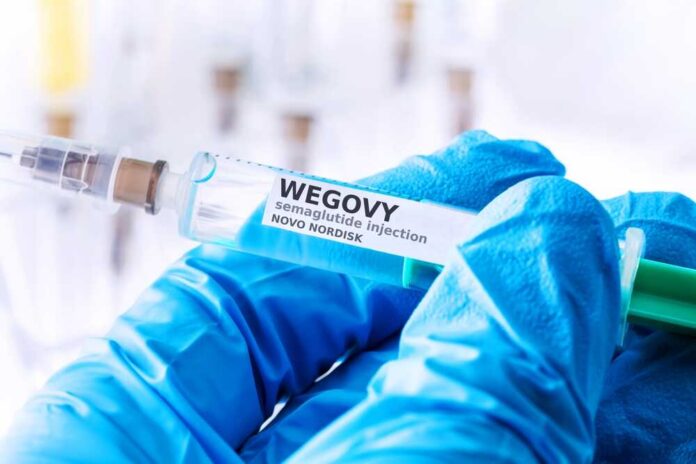
A $49 “copy” of a newly approved weight-loss pill just set off a legal showdown over whether telehealth-driven compounding is expanding into a loophole that could weaken FDA drug standards.
Quick Take
- Novo Nordisk says it will pursue legal and regulatory action after Hims & Hers launched a compounded oral semaglutide product positioned as a cheaper alternative to Novo’s new oral Wegovy.
- Novo alleges “illegal mass compounding and deceptive advertising,” arguing the Hims product is unapproved, inauthentic, and untested, raising patient-safety concerns.
- Hims & Hers says its pill uses a different formulation and delivery approach, but analysts say absorption and side effects are unclear without FDA-reviewed evidence.
- The dispute escalates the broader fight between branded GLP-1 makers and compounders that grew during shortages and has continued even as supply conditions change.
Hims’ $49 offer collides with Novo’s FDA-approved launch
Hims & Hers Health announced it would offer a compounded oral version of semaglutide through healthcare providers, pricing it at $49 for the first month as part of treatment plans.
The move lands just weeks after Novo Nordisk rolled out its newly approved oral Wegovy, a launch the industry has closely tracked because demand for GLP-1 weight-loss drugs remains intense. Novo says its product is the only authentic, FDA-approved oral Wegovy option.
Novo Nordisk responded the same day with a sharply worded statement warning of legal and regulatory action. The company characterized Hims’ approach as unlawfully mass-marketing an unapproved “knockoff” and emphasized the risks it associates with compounded products—quality variation, impurities, and untested dosing or additives.
Hims, by contrast, frames its offer as a more affordable path for patients facing high prices and coverage gaps, a tension at the heart of the GLP-1 market.
Why compounding became a parallel market—and why it’s now a flashpoint
U.S. compounding rules have historically allowed pharmacies to prepare customized medications in specific circumstances, including when personalized dosing is medically necessary or when approved drugs are in shortage.
During the surge in GLP-1 demand, shortages opened a lane for compounded injectable versions of drugs like Wegovy and Zepbound, and that lane grew rapidly. The current conflict shows how that dynamic is evolving from emergency access during shortages into ongoing mass-market competition.
The legal risk turns on whether a product is being compounded for individualized patient needs or produced at scale as a substitute for an approved brand drug. Novo’s statement argues Hims is crossing that line and pairing it with advertising that Novo says is deceptive.
The FDA has previously warned Hims & Hers about promotional practices related to its GLP-1 offerings, according to the cited research. At the time of the source reports, Novo had threatened action but had not yet announced a filed lawsuit.
Exclusive: Online telehealth company Hims and Hers Health will begin offering compounded copies of Novo Nordisk's new Wegovy pill at an introductory price of $49 per month, the company said, about $100 less than the brand name https://t.co/TLtqpU9w8N pic.twitter.com/8axXBoUXUt
— Reuters (@Reuters) February 5, 2026
Patient safety questions hinge on evidence, not marketing claims
Novo’s core public argument is that patient safety is best protected by FDA review, manufacturing controls, validated dosing, and demonstrated quality.
That matters even more with an oral semaglutide product, where formulation and delivery technology affect absorption in the digestive tract.
Hims says its compounded pill is formulated differently, but that claim alone does not establish equivalence. Without FDA-reviewed data for the compounded product, consumers are left weighing price against uncertainty.
Industry analysis echoed that uncertainty. UBS analyst Michael Yee, cited in the research, said formulation differences can make absorption and side effects unclear, and he indicated that the oral dimension warrants monitoring even if compounded prescriptions remain relatively small compared with overall GLP-1 prescribing.
That point is important for patients making decisions and for policymakers evaluating whether enforcement is keeping pace with fast-moving telehealth distribution models.
Markets react as investors price in legal and regulatory pressure
Investors reacted quickly after Hims’ announcement and Novo’s response. Reports described meaningful stock moves across the sector, including declines for Novo and competitor Eli Lilly, while Hims’ shares also turned negative after the initial news cycle.
The market response reflects a straightforward question: if compounded oral products proliferate, branded firms may face greater pressure on pricing and growth forecasts, and compounders may face greater enforcement and litigation risk.
Politically, the pricing context matters because Novo’s oral Wegovy pricing was reported in connection with a Trump administration deal referenced in the research summary, while Hims positioned its program as a cheaper alternative.
Regardless of where patients land on the affordability debate, the public-interest test is whether regulators can protect consumers from misleading claims while preserving access for legitimate, individualized compounding. Limited public information in the cited reports leaves open what specific legal filings, if any, will follow next.
Sources:
Novo Nordisk says it will take legal action after Hims & Hers reveals $49 copy of Wegovy pill
MedWatch: Pharma & Biotech article on Novo Nordisk legal action and Hims & Hers compounded pill
Novo Nordisk issues statement on illegal mass compounding and deceptive advertising by Hims & Hers
Hims & Hers copies Novo Nordisk’s new Wegovy pill