

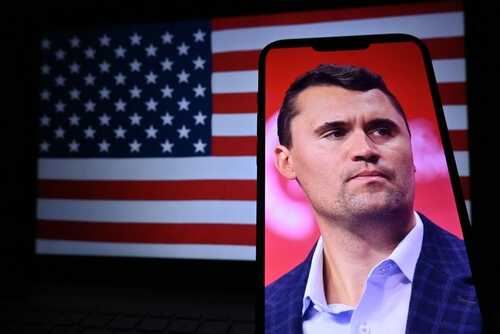
A national conservative campus tour just hit a grim reality: the leader of Turning Point USA skipped a major Georgia rally after receiving what organizers called “very serious threats.”
Story Snapshot
- Erika Kirk, CEO of Turning Point USA and widow of founder Charlie Kirk, canceled a planned appearance in Athens, Georgia, shortly before the April 14 event.
- Vice President JD Vance told the crowd he consulted the Secret Service and considered canceling, but ultimately spoke without her.
- Public details about the threats remain limited, and local law enforcement publicly indicated they were not aware of specific threat information at the time.
- A later report cited a Secret Service assessment finding “no credible threats,” complicating the public narrative around the cancellation.
- Commentary from outside TPUSA, including a claim that weak ticket sales drove the decision, has surfaced without public evidence substantiating it.
What happened in Athens, and why it drew national attention
Erika Kirk was slated to appear with Vice President JD Vance at Turning Point USA’s “This Is the Turning Point Tour” stop in Athens, near the University of Georgia, on April 14, 2026.
Hours before the event, TPUSA said that Kirk had received “very serious threats” and had decided not to attend. Vance addressed the situation from the stage, saying he supported her decision and had consulted with the Secret Service about whether the event should proceed.
TPUSA’s spokesperson, Andrew Kolvet, publicly confirmed the threats but provided no specifics about their nature, source, or whether a formal investigation was underway.
Reporting also indicated local police were not aware of detailed threat information at the time, and there was no immediate public comment from the FBI. The result is a familiar modern problem: a major security claim shaping headlines while the public receives few verifiable details about the underlying risk.
Why the Charlie Kirk assassination still shapes security decisions
The cancellation lands differently because of what happened less than a year earlier. TPUSA founder Charlie Kirk was fatally shot in September 2025 at an event at Utah Valley University, and that killing elevated Erika Kirk into a leadership role while the organization remained in the spotlight.
When a movement has already experienced political violence, threat reports are not abstract. Basic risk management pushes leaders to treat even vague warnings as potentially serious, especially when family safety is involved.
Vance’s comments underscored that reality, framing Kirk’s decision as personal protection rather than political theater. His remarks also highlighted the practical burden now placed on campaigns and advocacy groups: security planning is no longer reserved for Election Day or high-level officials.
It increasingly follows speakers into ordinary venues—arenas, campus-adjacent halls, and college-town stops—where polarized politics and protest activity can raise the temperature fast.
Erika Kirk withdraws from event with JD Vance over threats, VP says https://t.co/JIveQHSirg https://t.co/JIveQHSirg
— Reuters (@Reuters) April 15, 2026
Conflicting narratives: “very serious threats” vs. “no credible threats”
A key complication emerged after the event, when reporting cited a Secret Service assessment that found “no credible threats” related to the UGA rally.
That does not automatically mean the earlier warnings were fabricated; “no credible threat” can also reflect limited evidence, uncorroborated tips, or a determination that a specific plot is unlikely.
Still, the mismatch between an alarming cancellation and a later credibility finding leaves the public with uncertainty rather than clarity.
The information gap also created room for outside speculation. One public figure, Candace Owens, claimed the real reason for Kirk’s absence was low ticket sales, not security.
No public documentation in the reporting provided proof for that assertion, and it conflicts with the public explanation offered by TPUSA and repeated by Vance. With threats still unspecified and no arrests reported, readers are left to weigh competing claims with unequal supporting evidence.
What this episode says about campus politics and trust in institutions
TPUSA describes its campus work as a push for free markets and limited government; critics often brand it “far-right,” and the Athens stop reportedly drew counter-protests.
That mix—high-profile conservative messaging, energized opposition, and national media attention—creates a predictable pressure cooker.
Erika Kirk pulls out of huge Turning Point USA event with JD Vance after receiving 'very serious threats' https://t.co/pEl9Cv9b7K
— Debra Dury (@ddury5) April 15, 2026
The deeper issue is institutional credibility. When organizers cite threats, but the public later hears “no credible threats,” many Americans conclude the system is either failing to prevent intimidation or failing to communicate honestly about it.
That fuels a broader bipartisan suspicion that the “deep state,” political operatives, or media gatekeepers shape narratives for their own ends. The fix is not more rumor—it is transparent, timely reporting from law enforcement and federal security partners, consistent with public safety.
Sources:
JD Vance in Georgia criticizes pope, says Iran should ‘join world economy’
Erika Kirk cancels University of Georgia TPUSA event appearance over ‘serious threats’
Erika Kirk misses Georgia Turning Point USA event over safety concerns.
Secret Service: no credible threats to Turning Point UGA rally, Erika Kirk
Erika Kirk Candace Owens ticket sales
‘She was very worried’: Erika Kirk skips Georgia event due to threats, Vance says