

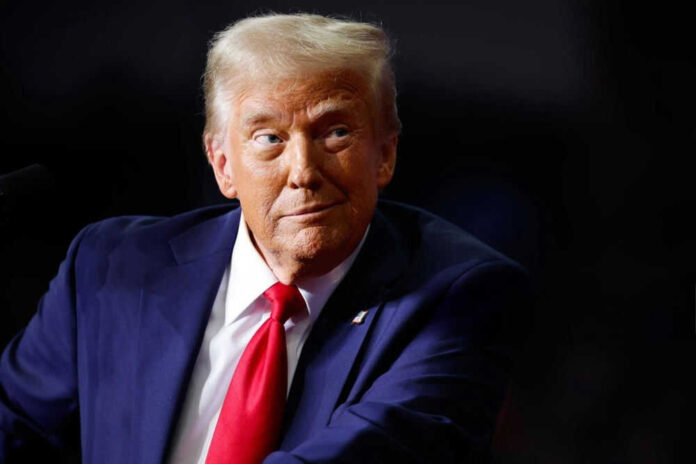
President Trump pledges a decisive move to unify AI regulation, promising to streamline an increasingly fragmented landscape.
Story Snapshot
- Trump announces plans to federalize AI regulation with a “One Rule” executive order.
- The executive order aims to eliminate state-level regulatory confusion that hinders U.S. competitiveness.
- Google CEO Sundar Pichai supports the need for national regulation to compete with China.
- The move is expected to bolster U.S. leadership in the global AI race.
Trump’s “One Rule” Executive Order
President Donald Trump announced his intention to sign an executive order to federalize AI regulation, aiming to simplify the current complex regulatory environment.
This initiative, dubbed the “One Rule” order, seeks to replace the disparate state-level regulations with a cohesive federal standard. Trump emphasized the need to maintain the U.S.’s edge in the AI sector by reducing bureaucratic hurdles that could stifle innovation and competitiveness.
Industry leaders, including Google CEO Sundar Pichai, have echoed concerns about the fragmented regulatory landscape. During an interview on “Fox News Sunday,” Pichai pointed out that over 1,000 AI-related bills are currently under consideration across various state legislatures.
Such a patchwork of regulations could impede U.S. companies’ ability to compete globally, particularly against countries like China that are rapidly advancing in AI technology.
TRUMP:
WILL BE SIGNING A “ONE RULE” AI EXECUTIVE ORDER THIS WEEK
this administration is going to keep making things easier for AI to flourish… pic.twitter.com/G0SWnsweV3
— amit (@amitisinvesting) December 8, 2025
Impact on U.S. Competitiveness
The executive order is expected to streamline the approval process for AI initiatives, which currently requires navigating numerous state-level regulations. This federal approach aims to foster a more conducive environment for innovation and investment in the AI sector.
By eliminating the need for companies to secure multiple state approvals, the U.S. can better position itself as a leader in the global AI race.
The decision to federalize AI regulation reflects a broader strategy to enhance national competitiveness by ensuring that regulatory frameworks do not hinder technological advancement.
The unified standard could also provide clearer guidance for companies, reducing compliance costs and enabling more efficient resource allocation towards research and development.
Support from Industry Leaders
Support from major tech industry figures like Sundar Pichai underscores the importance of a cohesive regulatory approach. The executive order aligns with calls from industry leaders for a streamlined regulatory environment that facilitates innovation while ensuring safety and ethical standards.
/This move may set a precedent for how emerging technologies are regulated in the U.S., balancing the need for innovation with appropriate oversight.
The Trump administration’s focus on a single, unified regulatory framework for AI highlights an ongoing effort to reinforce American leadership in cutting-edge technology sectors. As the global race for AI supremacy intensifies, this executive order could significantly impact the U.S.’s ability to maintain its competitive edge.