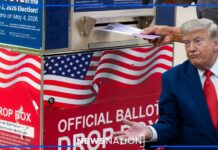
President Donald Trump’s threat to pull federal support from Baltimore has reignited the battle over urban crime, federal authority, and the limits of local control as the city remains a national flashpoint for conservatives frustrated by years of leftist urban failure.
Story Snapshot
- Trump clashes with Maryland Governor Wes Moore, blasting Baltimore’s leadership and threatening to reconsider federal funding for the city.
- The dispute highlights the tension between federal intervention and local control in addressing urban crime.
- Conservative concerns persist over whether recent progress is sustainable or simply political spin by Democratic officials.
Federal-State Clash Over Crime in Baltimore
In late August 2025, Maryland Governor Wes Moore formally invited President Trump to join a public safety walk in Baltimore, attempting to showcase the city’s collaborative approach to reducing crime.
Trump’s response was swift and pointed: on Truth Social, he called Baltimore “out of control,” slammed Moore’s record, and warned that continued federal support for the city was on the line.
This exchange underscored a deepening rift between the Republican administration and Democratic local leadership, with Trump using Baltimore as a symbol of failed progressive policies.
The president referenced his recent deployment of the National Guard to Los Angeles and the federal takeover of D.C.’s police as evidence of decisive federal action where local solutions have fallen short.
Trump’s rhetoric tapped into years of conservative frustration with Democratic urban management, raising the stakes for Baltimore’s officials. While Moore and Mayor Brandon Scott tout a collaborative “all-of-the-above” strategy involving police, prosecutors, and community groups, Trump’s messaging frames these efforts as too little, too late.
The president’s threat to cut federal funding echoes his campaign promise to hold so-called “sanctuary” jurisdictions accountable and to use federal muscle to restore order in cities he sees as plagued by lawlessness. For conservatives, this approach resonates as a long-overdue assertion of national authority against what many view as local leaders’ “soft-on-crime” stances and resistance to real accountability.
Baltimore’s Crime Trends: Record Lows or Political Spin?
Baltimore’s crime statistics in 2025 complicate the political narrative. Official data confirms that homicides are down 22%, auto thefts have dropped 34%, and robberies have fallen 23% compared to previous years.
Nonfatal shootings and other violent crimes have also reached historic lows, with city press releases and the Baltimore Police Department’s mid-year report validating these marked improvements. However, for many residents and outside observers, the city’s reputation remains tarnished by decades of violence and failed leadership.
Critics argue that, despite recent declines, crime rates are still unacceptably high and question whether the current progress is sustainable or just the result of favorable short-term trends. This gap between statistical improvement and public perception fuels ongoing controversy and political grandstanding.
The administration’s aggressive push for greater federal control over urban crime—seen in the National Guard’s deployment to Los Angeles and the federalization of D.C.’s police—signals a willingness to override local authority in the name of public safety. Trump’s critics, including Moore and Scott, argue that such moves risk undermining community trust and long-term solutions.
They maintain that progress in Baltimore is due to local investment in policing reforms and violence intervention programs, not heavy-handed federal intervention. Nonetheless, Trump’s supporters see these measures as necessary steps to restore order and uphold law and order in cities beset by years of leftist mismanagement.
Broader Implications for Federalism and Conservative Priorities
The standoff in Baltimore is more than a local dispute; it reflects a national debate over the proper balance between federal power and local autonomy. Trump’s approach—threatening funding, deploying troops, and nationalizing the urban crime issue—raises critical questions about the future of federalism, especially as it relates to policing and public safety.
For many conservatives, this is a vindication of longstanding concerns about the consequences of progressive leadership: lax enforcement, eroding constitutional rights, and the undermining of traditional American values. At the same time, the situation highlights the challenge of sustaining real change in cities with deep-rooted problems.
Whether Baltimore’s recent crime drop proves durable or not, the city remains a political battleground where the core issues of government overreach, accountability, and the safety of law-abiding citizens are on full display.
Trump Calls for Wes Moore to Clean Up Crime-Ridden Baltimore! "Stop Talking and Get to Work!" https://t.co/4SwnDUXwBm via @BreitbartNews
— Paul Phillips (@carolinastreet) August 25, 2025
The outcome of this federal-local power struggle will have far-reaching consequences—not just for Baltimore, but for the national discourse on crime, urban policy, and the priorities of a conservative movement determined to reverse years of perceived decline.
As Trump continues to leverage federal authority and spotlight urban crime, conservative Americans are watching closely, demanding results, and insisting that constitutional values and public safety come before political spin or failed progressive experiments.
Sources:
Baltimore City hits new record in homicides drop
Baltimore Police Department releases 2025 mid-year crime report and key highlights
Mayor Brandon M. Scott statement on continued decrease in gun violence, August 2025
Mayor Brandon M. Scott announces continued declining homicides, June 2025