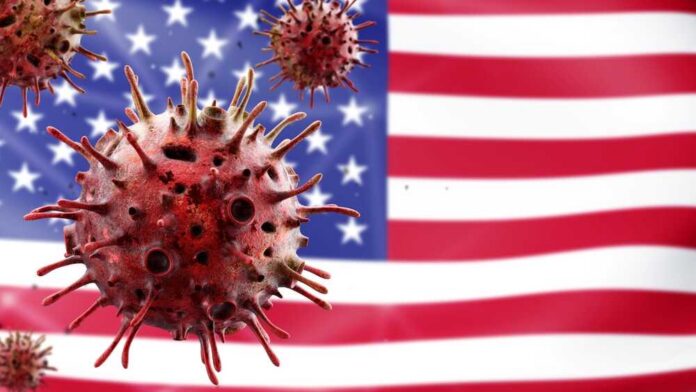
An American doctor catching a vaccine-less Ebola strain in a remote Congo hospital is not just a scare story; it is a stress test of how far Western comfort really extends when biology stops playing nice.
Story Snapshot
- American missionary doctor Peter Stafford tests positive for a rare Ebola strain while serving in Congo.[3][5]
- His infection exposes the fragile line between selfless medical mission and extreme biological risk.[3]
- Government agencies move quickly to extract him and other Americans while insisting U.S. risk is low.[1][2]
- The Bundibugyo strain has no approved vaccine, sharpening questions about prudence, duty, and preparedness.[3]
An American Doctor, A Remote Hospital, And A Virus With No Vaccine
American medical missionary Peter Stafford left the safety of the United States to treat patients at Nyankunde Hospital in Bunia, in the Democratic Republic of Congo, and came back as something far rarer: a confirmed case of Bundibugyo ebolavirus.[3][5]
His mission organization, Serge, says he had served there since 2023 and was exposed while caring for patients during the outbreak.[3] He developed symptoms, was tested under Africa public-health guidance, and received a positive result, triggering an international evacuation.[3]
Television reports then did what they always do: compress the chaos into a headline frame—“American doctor tests positive for Ebola.”[1][2]
Viewers saw a missionary father of four, a disease known for bleeding and organ failure, and a reminder that this particular Ebola variant carries no licensed vaccine or specific treatment.[2][3]
The Centers for Disease Control and Prevention (CDC) confirmed his infection and coordinated with the State Department to arrange his transfer to Germany for specialized care.[1][4]
Bundibugyo Ebola: The Strain That Forces Hard Questions
The Bundibugyo strain lurks in the uncomfortable middle ground of modern medicine: terrifying enough to kill, obscure enough that pharmaceutical companies have never brought a vaccine across the finish line.[2][3]
Health officials describe this outbreak as only the third known episode caused by this variant, with earlier events in Uganda and elsewhere in Central Africa.[2]
Symptoms begin like a common viral illness—fever, fatigue, muscle pain—and then can progress to vomiting, diarrhea, organ failure, and internal or external bleeding.[2]
For Americans who assume science always has a shot or a pill ready, that absence of a vaccine is the real plot twist. Stafford did not walk into chaos blindly; Serge says he followed established protocols and sought testing under guidance from the Africa Centers for Disease Control and Prevention and the World Health Organization after symptoms appeared.[3]
Yet even layered precautions could not guarantee safety in a setting where laboratory cartridges initially targeted the wrong Ebola strain, delaying outbreak recognition and allowing spread.[4]
Risk, Responsibility, And The Missionary Mindset
Stafford’s story exposes a tension that cuts straight to instincts about personal responsibility and calling. On the one hand, many Americans admire a doctor who uses his skills in an understaffed hospital in a poor country rather than chasing prestige at home.
On the other hand, taxpayers inevitably shoulder parts of the bill when a high-risk call goes sideways, from international evacuations to care in advanced facilities. Six additional Americans tied to the outbreak are being moved for monitoring or treatment, the CDC confirms.[2][4]
Serge stresses that Stafford, his wife, and another physician strictly followed quarantine protocols once they realized they might have been exposed.[3]
That claim fits a pattern of missionaries trying to model responsibility in places where public-health systems are fragile, but it also comes from an organization with reputational skin in the game.
The public record here lacks direct lab reports, exposure logs, or sworn accounts from clinicians, so outsiders must rely on institutional statements and media summaries that emphasize order and containment.[1][3][4]
Outbreak Theater, Media Panic, And What Actually Threatens You
Federal health authorities and broadcasters quickly reassured Americans that overall risk at home remains low, pointing out that infection requires contact with bodily fluids like blood, vomit, or semen rather than casual exposure.[2][5]
Travel restrictions targeting non-citizens who recently traveled through affected countries add another layer of reassurance, at least on paper.[1][3]
This is the standard choreography: headline fear, followed by officials promising control, followed by the public tuning out if the story does not immediately affect their commute.
Dr. Peter Stafford, a medical missionary with Serge, was exposed to Ebola while treating patients at Nyankunde Hospital in the DRC.
The organization said he sought testing after developing symptoms consistent with the virus.
— U.S. News | Washington Above (@WashingtonAbove) May 19, 2026
The real lesson for American adults with mortgages, grandkids, and very little patience is more subtle. When a virus with no vaccine jumps from a remote funeral procession in Congo to an American passport, the border between “their problem” and “our problem” shrinks.
The question is not whether you should panic; the question is whether your institutions are honest about what they know, what they do not know, and what tradeoffs they are making on your behalf while insisting the risk is “low.”[3][4]
Sources:
[1] YouTube – American doctor tests positive for Ebola in Africa
[2] YouTube – US missionary tests positive for Ebola as Australia weighs response
[3] Web – American Medical Missionary Safely Evacuated and … – Serge
[4] YouTube – American doctor with Richmond ties tests positive for Ebola while …
[5] Web – American doctor tests positive for Ebola in Democratic Republic of …