
Six unnamed Americans, a lethal virus with no approved vaccine, and a government speaking in deliberate half-sentences: this is what an early-stage health scare really looks like.
Story Snapshot
- Reports say at least six Americans in Congo were exposed to Ebola, one possibly symptomatic, but no infections confirmed yet [1][3].
- The outbreak involves the Bundibugyo strain, a variant with no approved vaccine or specific treatment [2].
- World Health Organization declared a public health emergency, while United States officials insist the risk to Americans at home remains low [2].
- Conflicting incentives now collide: media urgency, bureaucratic caution, and public fatigue after the coronavirus pandemic.
How Six Anonymous Americans Became The World’s Latest Test Case
CBS News reported that at least six Americans in the Democratic Republic of the Congo were believed to have been exposed to Ebola, three of them through high-risk contact and one reportedly showing symptoms, based on sources tied to international aid organizations [1].
STAT News separately described a “number of Americans” believed to have had exposure, emphasizing that no test results were yet available for any of them [3]. That combination—specific numbers, vague identities—is exactly how outbreak stories usually begin.
The suspected exposures occurred amid a fast-growing outbreak in Ituri province, eastern Congo, involving the Bundibugyo strain of Ebola [2][3].
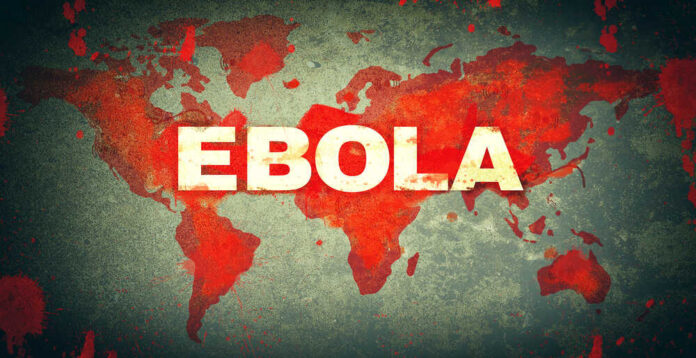
The World Health Organization labeled the crisis a public health emergency of international concern after reports of ten confirmed cases, hundreds of suspected cases, and dozens of deaths in Congo, plus confirmed spread into neighboring Uganda [2][3].
In the affected areas, health care access is thin, roads are poor, and security problems slow any response [3]. Those conditions increase risk for local communities and for foreign responders alike.
What Official Silence Really Means In An Outbreak
While media outlets circulated the “at least six Americans” figure, the United States Centers for Disease Control and Prevention refused to confirm whether any Americans in Congo had been exposed or infected.
The agency instead stressed that it was “actively working” with the embassy to assess the situation and repeated that the risk to the American public remained low [3].
The United States Embassy in Kinshasa issued a Health Alert acknowledging the World Health Organization’s emergency declaration and the Ebola outbreak in the Democratic Republic of the Congo and Uganda, but said nothing about American infections.
Embassies generally do not publish names, diagnoses, or exposure counts for their citizens overseas, for both privacy and security reasons.
That secrecy can be maddening for the public, but it does not automatically mean the early media reporting is wrong; it often means the bureaucracy wants time and deniability.
Ebola, Bundibugyo, And Why “Exposure” Is Not “Game Over”
Americans hear “Ebola” and imagine a Hollywood-style contagion sweeping airports, but the virus spreads through direct contact with bodily fluids, not through casual contact or the air [3].
Ebola is highly lethal in areas with weak care, but it is relatively containable in high-resource settings with proper infection control.
That is why the Centers for Disease Control and Prevention could truthfully claim that the average American did not need to panic, even as it acknowledged that some Americans were “directly affected” and were being withdrawn from the region [3].
The Bundibugyo strain complicates matters. Centers for Disease Control and Prevention officials confirmed there are no United States Food and Drug Administration-approved vaccines or specific therapeutics for this variant [3].
Patients receive supportive care—fluids, electrolytes, and close monitoring—which can still greatly improve survival if initiated early.
For field workers in Ituri, that means exposure is more frightening and treatment options narrower. For Americans back home, it mainly means that any imported case would demand disciplined hospital protocols, not a nationwide shutdown.
Media Panic, Bureaucratic Caution, And The Public’s Short Fuse
Times Now and other outlets amplified the core claim that at least six Americans were exposed in Congo just as the World Health Organization announced the global health emergency.
Social media accounts then accelerated the story, boiling nuance down to punchy “six Americans exposed” posts, with few reminders that exposure is not the same as confirmed infection.
That kind of framing reliably pushes fear ahead of facts, something many Americans learned the hard way during coronavirus coverage.
🚨 POTENTIAL EBOLA EXPOSURE IN DRC 🇨🇩
At least six US CITIZENS have reportedly been exposed to EBOLA in the DEMOCRATIC REPUBLIC OF CONGO with one person currently showing SYMPTOMS. Authorities are likely tracking movements to contain any further spread of the virus. …
— OSN – Observer Security Network (@OSN_Reports) May 18, 2026
Federal agencies, burned by accusations of both overreach and underreaction during the pandemic, now respond with technocratic understatement.
The Centers for Disease Control and Prevention activated its emergency response center, deployed support teams for surveillance, laboratories, and border health, and quietly coordinated the “safe withdrawal of a small number of Americans who are directly affected by this outbreak” [3].
Those words acknowledge the real stakes while downplaying the drama, but they also leave citizens guessing whether “directly affected” refers to the six reported exposures or something more.
What Sensible Americans Should Watch For Next
Readers over forty have already lived through swine flu, SARS, the coronavirus, and assorted panics that fizzled out. Healthy skepticism is justified. Still, several hard questions now deserve answers.
Did United States agencies track these six Americans through formal exposure logs? Were any of them medically evacuated, and if so, where were they quarantined? Do embassy duty logs or partner organization records match the counts and risk levels described by CBS News and STAT [1][3]?
American values stress clear accountability, limited but competent government, and respect for individual privacy. Those principles can coexist. Officials do not need to name patients to release de-identified exposure numbers, timelines, and testing outcomes.
Congress and watchdog journalists can press for post-incident reporting: how many Americans were monitored, how many tested positive, what worked in the response, and what failed. The point is not to stoke panic over Ebola; it is to make sure the next health scare is handled with more candor than spin.
Sources:
[1] Web – At least 6 Americans in Congo were exposed to Ebola virus, sources …
[2] YouTube – Ebola: Americans reported exposed, DRC boosts control efforts
[3] Web – Ebola outbreak: Americans in Congo believed to have had exposure …