

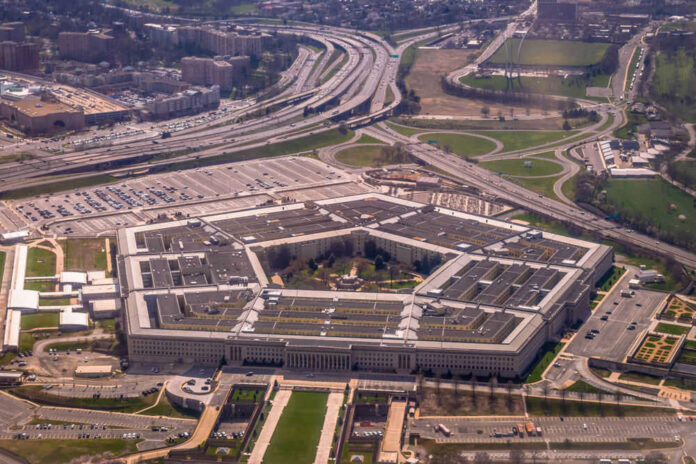
The Army wants to restart helicopter training near Reagan National, but only if the Federal Aviation Administration signs off—and that “if” now carries 47 open safety demands.
Story Snapshot
- The Army told lawmakers flights would not resume without Federal Aviation Administration approval.
- The Federal Aviation Administration said agency approval is required and that it has not yet received a formal request.
- The National Transportation Safety Board says 47 safety recommendations remain open.
- A May 2025 Army Black Hawk incident near the Pentagon led to two aborted landings at Reagan National.
What is actually on the table
The Army briefed select lawmakers on a plan to restart helicopter test or training flights in the congested airspace around the Pentagon and Reagan National. Reports described a possible start as soon as early to mid-December, though dates varied. The Army said it was coordinating with the Federal Aviation Administration and that flights would not restart without that agency’s approval, according to Rep. Don Beyer’s office and federal regulators. The Federal Aviation Administration also stated its approval is required before any training can restart.
The Federal Aviation Administration said it had not received a formal request when news of the plan surfaced, which means the clock on any official review had not started. That matters because the National Transportation Safety Board, which investigated the deadly midair collision near the airport, still lists dozens of open fixes. Any relaunch will run through a regulator with fresh scrutiny and a long memory. Process details are no longer paperwork; they are the safety gate.
Why families and lawmakers are pushing back
Victims’ families and several elected officials want proof that risk has dropped, not promises that it will. They ask what has changed in equipment, routes, alerts, and crew procedures since the crash. The National Transportation Safety Board says 47 safety recommendations remain open, including calls for aircraft tracking technology and audible cockpit alerts. Sen. Mark Warner and Rep. Don Beyer have pressed the Army to finish those steps before returning to this airspace, and to consider training elsewhere.
Public concern sharpened after a separate May 2025 event where an Army Black Hawk near the Pentagon came close enough to Reagan National traffic that two commercial flights aborted landings. The Federal Aviation Administration later suspended military helicopter training flights. That near miss offers a concrete, recent example for skeptics who warn that the system’s seams are still showing and that high-density, nighttime training near a major runway needs stricter guardrails.
The safety case the Army must show.
A credible relaunch needs more than coordination memos. The National Transportation Safety Board’s investigation found systemic failures in route design, oversight, and risk management across agencies. That finding raises the bar for resuming training in this airspace. A strong plan would document hazards, weather limits, routes that protect separation, and go/no-go rules that do not depend on luck. It would also show that helicopters carry traffic awareness and audible alerting that match today’s risk picture.
The U.S. Army is looking to resume helicopter training flights near Ronald Reagan Washington National Airport (DCA), less than two years after a midair collision between an Army helicopter and a regional jet killed 67 people. https://t.co/rwX2bydQ1p pic.twitter.com/JJzjGlQ2gQ
— AvWeb (@avwebnews) November 25, 2026
Common-sense oversight means asking for the Army’s full safety risk assessment and proof that fixes now live in the cockpits and the control room, not just on slides. The Federal Aviation Administration should publish the conditions for any approval. If technology and procedures are not yet ready, training can shift to less congested airspace. That stance aligns with conservative values of accountability, prudent risk, and respect for life without hobbling needed readiness when safeguards are real and verified.
How this likely plays out next
The next step is formal submission from the Army to the Federal Aviation Administration, followed by an agency review that weighs National Transportation Safety Board findings and recent incidents. Lawmakers will press for transparency. Families will judge changes by specifics, not timelines. If the Army can show hardened routes, reliable separation from arrivals, and cockpit alerts that shout when seconds count, approval becomes thinkable. Without that, expect delay, alternate sites, or stricter limits on when and how training occurs.
Sources:
cbsnews.com, nbcwashington.com, avweb.com, adn.com, subramanyam.house.gov