
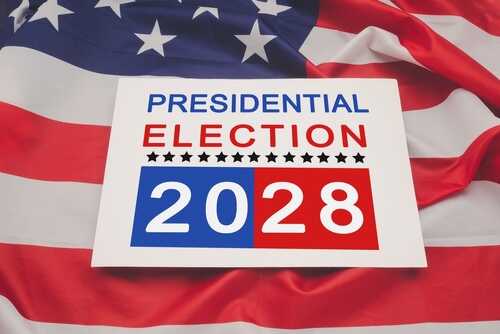
Democrats just laid out a 12-debate roadmap for the 2028 presidential race, and candidates who want a podium must first swear off dark money.
Story Snapshot
- The Democratic National Committee (DNC) unveiled a schedule of 12 primary debates running from June 2027 through early 2028.
- The plan includes five debates in 2027 and seven in 2028, with a cap of 20 candidates per event.
- Candidates must sign a Fair Campaign Practices Pledge denouncing super PAC and dark-money spending to qualify.
- The DNC admits it cannot legally stop outside groups from spending independently, even as it demands candidates reject that help.
A Debate Calendar Built Two Years Out
The DNC announced its 2028 debate framework, giving candidates and voters an unusually long runway before the first contest. Five debates land in 2027, starting that June, with seven more stretching into 2028. That timeline puts the party’s process in motion nearly a full two years before primary voters cast a single ballot.
The early start signals something bigger than scheduling. Party officials want to shape the field long before cable news and outside money machines do it for them. DNC Chair Ken Martin said the goal is a fair, transparent process that keeps Democrats united and builds a stronger nominee heading into the general election.
Handling a Crowded Field Without Losing Control
With 20 candidates potentially qualifying, the DNC built in a release valve. If the field gets too big for one stage, the party will randomly split candidates across two nights. Random selection, rather than polling thresholds alone, aims to head off accusations that the party is picking winners before voters get a say.
A crowded primary stage has tripped up both parties before, fragmenting attention and giving frontrunners outsized exposure. Splitting the field across two nights addresses the logistics, but it does not erase the challenge of giving twenty candidates equal airtime. How the DNC handles that balance will shape perceptions of fairness long before any votes are counted.
The Dark-Money Pledge as a Gatekeeping Tool
The headline-grabbing piece of the plan is the Fair Campaign Practices Pledge. To appear on a debate stage, candidates must publicly denounce super PAC and dark-money spending made on their behalf. It is a direct shot at the anonymous-money ecosystem that has flooded modern campaigns with untraceable cash.
The DNC openly acknowledges what it cannot do. The party has no legal authority to block independent expenditures from super PACs or nonprofit dark-money groups. So instead of banning the money, it is demanding candidates say no to it in public, betting that peer pressure and party rules can accomplish what campaign-finance law does not.
That creates a real tension. A candidate can denounce a super PAC’s ad and still benefit from the exposure it buys. Outside groups answer to no one but their donors, and they can keep spending regardless of what a candidate says on a debate stage. The pledge is a values test, not a spending cap, and voters should see it that way.
Why Party Control Over Debates Keeps Growing
This is not the first time a party has used debate rules to assert control. Decades ago, media organizations and campaigns negotiated debates directly, with little party oversight. Over time, parties realized unregulated debates created chaos, so they built formal qualification rules, sanctioning systems, and scheduling authority of their own.
Dark money itself has ballooned into a serious force in American politics. Outside spending in federal elections topped $2.6 billion in the 2020 cycle alone, nearly eight times the dark-money total from a decade earlier. Seen against that backdrop, the DNC’s pledge looks less like a bold new idea and more like a party trying to catch up to a problem it helped normalize for years.
What Remains Unsettled
The DNC has not yet released the full pledge text, enforcement rules, or penalties for candidates who sign on and then benefit from undisclosed spending anyway. Until that detail surfaces, the policy functions more as a public pledge than an enforceable rule, and skeptics on all sides will have grounds to question whether it changes anything beyond campaign messaging.
https://twitter.com/DebbieNester1/status/2125041999795671489
Conservatives watching this unfold should note the irony. Democrats spent years benefiting from outside spending and allied nonprofit networks, and now the party wants credit for policing the very system it helped build. A pledge without enforcement teeth reads more like a press release than a reform, and voters deserve to see whether the DNC follows through once real money starts flowing.
Sources:
cbsnews.com, time.com, us.cnn.com, thehill.com, washingtonexaminer.com, link.springer.com