

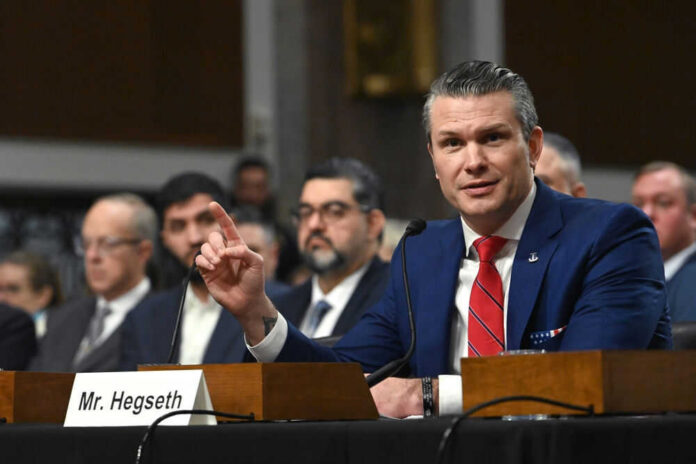
President Trump asked advisers whether Defense Secretary Pete Hegseth should stay after Republicans’ midterm losses.
Story Snapshot
- Trump sounded out advisers on whether to keep or replace Pete Hegseth after the November 3, 2026 losses.
- Reports tied the conversations to Republican setbacks in both chambers, intensifying blame casting.
- White House aides reportedly split on whether Hegseth should shoulder post-election fallout.
- Turnover in senior roles has precedent in Trump’s orbit, adding context to a possible review.
What Sparked Trump’s Question: The Midterm Fallout
CBS News reported that Trump asked advisers, in person and by phone, whether Hegseth should remain defense secretary, linking the timing to Republicans’ heavy losses on November 3. Advisers framed the discussion as a response to a bad political night and a search for accountability. Additional coverage echoed the same core account and noted that Trump later said he was not considering removing Hegseth, which underscores how personnel talk can run ahead of final decisions. The conversations happened fast, as parties assessed damage and next steps.
Reports also described internal debate about blame. Some aides reportedly argued the defense portfolio, including the Iran war and the strain on munitions, fed voter frustration and contributed to defeats. Others pushed back, saying national security wins should not become a scapegoat for broader political problems. That split tracks with past cycles when parties search for clear causes after surprise losses. One adviser characterization suggested a temperature check, not a signed plan, which matches standard post-election review behavior.
How This Fits Trump’s Management Pattern
Senior staff churn has marked the Trump political era before. Reuters, citing Brookings data, documented that Trump’s first administration had the highest senior-staff turnover among the last five presidencies, and defense leadership changed more than once in that period. That record makes a rapid, leader-driven personnel review plausible after a political shock. Presidents often test options privately before acting publicly. Asking whether a top official should stay does not equal removal; it does show the president wants options and leverage when the map turns red for the other side.
Cabinet-level changes also serve as signals. Leaders sometimes move officials to show voters they heard the message. Other times they keep a steady hand to project control. Both paths line up with conservative instincts about results and responsibility. If policy helped cause losses, change can be a prudent correction. If media spin inflated blame, a vote of confidence can shield mission focus. Trump’s question suggests he was weighing both signals at once, which is a common executive tactic after a bruising night.
Policy, Politics, and the Hegseth Portfolio
Pete Hegseth’s tenure drew intense attention because of war decisions, procurement stress, and personnel reshuffling at the Pentagon. Campaigns often convert those headlines into voter feelings, fair or not. Political outlets reported that Florida Governor Ron DeSantis emerged in some chatter as a hypothetical replacement, reflecting how speculation rides any whiff of change. However, that remained at the level of sourced reporting summaries at the time. According to reports, the focus inside Trump’s circle stayed on whether Hegseth’s presence helped or hurt the path forward.
🚨 BREAKING: President Trump is reportedly asking advisers whether Defense Secretary Pete Hegseth should stay after the GOP’s midterm losses.
Multiple sources told CBS News that Trump has been consulting staff on Hegseth’s future, with some aides linking the Iran war to the… pic.twitter.com/LxU74h6fx3
— 🩸ᑭᗝᗯᗴᖇ ᗪᗝᗯᑎ ᗰᗴᗪᎥᗩ© 🇺🇸 (@MediaZen_24) November 5, 2026
Conservatives value peace through strength, clear chains of command, and accountability without theater. On those terms, testing whether the defense chief is still the right fit after voters sent a message makes sense. If strategy is sound and results are strong, keep him and make the case. If the political cost now outweighs the policy benefit, swap and reset. The key is mission first, politics second—yet the two always touch in a democracy. A president’s duty is to balance both without letting the Pentagon become a stage prop.
What To Watch Next
Watch for three tells. First, a public vote of confidence would signal stability and a choice to ride out the storm. Second, a quiet search and a short list would confirm that the review moved from talk to action. Third, Congress will test any move with hearings and messaging. That scrutiny can harden support or speed a change. For now, the reporting shows a president pressure-testing his options after a setback and an inner circle debating how to turn the page.
Sources:
cbsnews.com, clickorlando.com, jfeed.com, reuters.com