

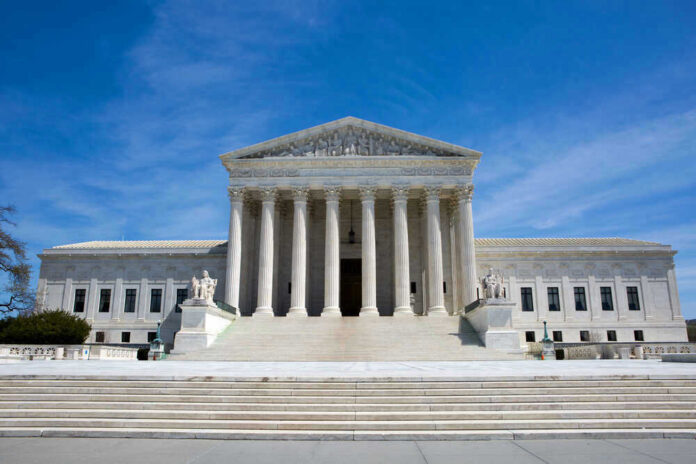
The Trump administration asked the Supreme Court to restart border wall work across Big Bend, turning a regional pause into a national test of executive power and border security.
Story Snapshot
- The Justice Department filed an emergency request to lift a sweeping injunction.
- The order blocks all wall work across more than 500 miles in the Big Bend Sector.
- The government cites a federal statute that lets Homeland Security waive laws.
- Local lawsuits argue the waivers and wall plan are unlawful and harmful.
What the administration asked the Supreme Court to do
The Justice Department asked the Supreme Court to stay, or overturn, a district judge’s order that halted border barriers and related work across the Big Bend Sector of Texas. The filing seeks emergency relief so federal crews can resume construction and ground-disturbing activity while lawsuits continue. The government argued its border-security needs outweigh the harms challengers claim. It also asked for summary reversal, calling the injunction baseless under federal law.
U.S. District Judge Kathleen Cardone issued the preliminary injunction after landowners and groups sued over new barriers, roads, and lighting. Her order stopped wall work and “any construction or ground-disturbing activities” across the sector, not just one project segment. The administration now frames that breadth as a core problem. A halt this large delays planning, staffing, and equipment already staged for multiple sites, compounding costs and weakening readiness on the ground.
The legal lever: Section 102(c) and why it matters
The Department of Homeland Security relied on Section 102(c) of the Illegal Immigration Reform and Immigrant Responsibility Act. That statute allows the Homeland Security secretary to waive legal requirements that would slow border infrastructure. The plaintiffs target those waivers head-on. They argue the Big Bend waivers, issued in February 2026, violated the Constitution and skipped vital safeguards for the environment and cultural sites. The district case record identifies those waivers as the dispute’s heart.
Congress wrote Section 102(c) to speed construction in high-need zones. Courts have allowed narrow challenges, mainly on constitutional grounds, while many routine environmental claims have been dismissed. That structure places heavy weight on the executive’s judgment and puts time pressure on courts. The Supreme Court often moves fast in disputes over national security and immigration operations. The administration is betting the justices will again prioritize security and statutory text over process fights during active litigation.
Why Big Bend became the flashpoint
The Big Bend Sector spans more than 500 miles and dozens of Texas counties. That size makes it hard to police with agents alone. The government says new barriers, access roads, and lighting would close gaps that cartels and smugglers exploit. It argues that the tool mix helps agents channel crossings to points of control and cuts pursuit risks in rugged terrain. The district court’s order blocks that full package, not only fence panels. That block raises operational and safety stakes.
Opponents counter that Big Bend’s canyons, cliffs, and the Rio Grande already act like a wall. A local sheriff called it a “God-made barrier” and warned concrete and steel would do little but scar a pristine area. Landowners and tourism advocates say roads and lighting would change the region’s character and cut access to river sites that drive visitor spending. Some ranchers also fear barriers will split working facilities from water and fields, hurting daily operations.
The breadth of the injunction and the stakes for executive authority
The injunction’s scope is unusual. It halts barriers, related infrastructure, and any ground-disturbing work across the entire sector. The government argues that kind of blanket stop order intrudes on executive duties Congress assigned to the security agencies. It says courts should not second-guess the Homeland Security secretary’s waiver decision during a border mission unless the record shows a clear constitutional violation. That is the administration’s core separation-of-powers pitch.
🚨 NEW: The Trump administration has asked the SUPREME COURT to intervene and allow construction of the southern border wall to resume in West Texas.
The Justice Department filed an emergency application Wednesday seeking to overturn a federal judge's order blocking construction… pic.twitter.com/CfLVuhHugm
— Unmask The SYS (@UnmaskTheSys) October 22, 2026
Challengers say the secretary’s waivers broke the law and skirted the Constitution. They filed suits on behalf of landowners, conservation groups, and local interests. Their filings describe damage to wildlife corridors, flood risk, and harm to cultural and religious sites. They also point to limits on property access and fear of land seizure. Those are concrete worries, but courts still must weigh them against Congress’s grant of speed and discretion for border builds.
What to watch next from a conservative rule-of-law lens
The Supreme Court will decide first whether to pause Judge Cardone’s order. A stay would restart work and hint that the justices see legal error in the injunction’s reach. A denial would keep the halt in place and pressure the administration to narrow plans or fortify its record. Conservative common sense favors clear lines: Congress gave a tool, the secretary used it, and security agencies need room to act unless rights are plainly violated. That standard points toward a tailored stay.
Two questions will define the outcome. First, did the Homeland Security waivers meet Section 102(c)’s speed and necessity requirements in Big Bend? Second, did the district court’s order overreach by blocking all construction across the sector rather than specific parcels with proven harm? The answers will shape not only Big Bend but future border projects. The ruling will signal how much process can slow security when Congress has already tipped the scale toward action.
Sources:
cbsnews.com, reuters.com, mrt.com, tpr.org, clearinghouse.net, enr.com