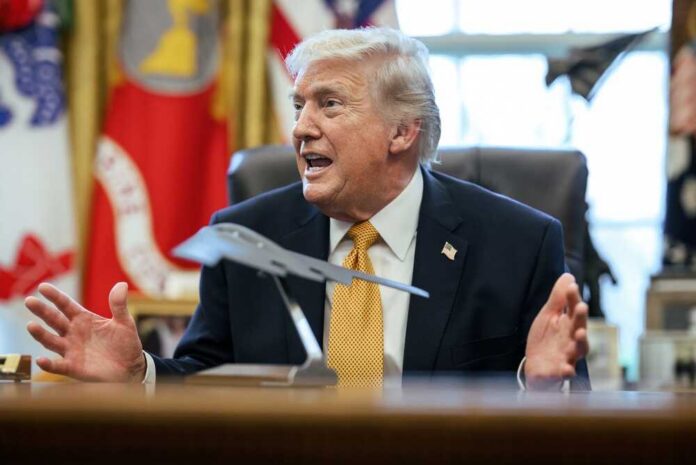
A fight over whether Americans should ever change their clocks again has turned into a very public standoff between President Trump and one of his own party’s senators.
Quick Take
- The House passed the Sunshine Protection Act with a lopsided 308-117 vote, but the bill remains stuck in the Senate.
- President Trump is pushing hard for permanent Daylight Saving Time and publicly posted Senator Tom Cotton’s cell phone number to pressure him.
- Cotton, an Arkansas Republican, says permanent Daylight Saving Time would leave kids walking to school in total darkness during winter.
- The country tried permanent Daylight Saving Time before, in 1974, and lawmakers repealed it after public backlash over dark mornings.
A Popular House Bill Hits A Senate Wall
The Sunshine Protection Act would end the twice-a-year ritual of springing clocks forward and falling them back. The House passed it with strong bipartisan backing, clearing 308-117. That kind of margin usually signals momentum. Instead, the bill has sat in the Senate for months with no scheduled vote, leaving a popular idea stranded in procedural limbo.
Trump Makes It Personal
President Trump has called the biannual clock change “ridiculous” and wants it gone for good. He shared a letter from PGA Tour Chief Executive Officer Brian Rolapp backing the bill, arguing later evening sunlight helps sports and local businesses. When the bill stayed stuck, Trump escalated. He posted Cotton’s personal cell phone number online and urged Americans to call the senator directly and demand he drop his opposition.
That move turned a policy disagreement into a political spectacle. Instead of debating sunrise times on the Senate floor, cable news and social media spent days covering a president publicly pressuring a sitting senator by phone. It is a reminder that in modern politics, the loudest fight sometimes overshadows the actual argument underneath it.
Cotton’s Case: Protect The Kids, Not The Clocks
Cotton has not budged. In a floor speech opposing the bill, he warned permanent Daylight Saving Time would make winter “a dark and dismal time for millions of Americans”. His core argument is simple: push sunrise back an hour in December and January, and kids end up waiting for school buses in pitch darkness. He has said flatly that Arkansans do not want their children heading to school before the sun comes up.
The numbers back up his worry. Under permanent Daylight Saving Time, sunrise would hit around 8:20 a.m. in New York, 9:05 a.m. in Detroit, and a staggering 9:42 a.m. in parts of North Dakota on the first day of winter. Those are not small shifts. For families getting kids out the door before sunrise anyway, adding another hour of darkness is a real safety concern, not just an inconvenience.
Republican Colleagues Are Split
Cotton is not alone in his skepticism. Senator Roger Wicker backed him up, saying there are “real safety concerns, particularly in the more northern and rural states where children get on the school bus at very early hours”. That matters. When a fellow Republican senator openly defends the holdout against a president from his own party, it signals this is not simple partisan obstruction. It is a genuine policy disagreement inside the conservative coalition.
US NEWS: President Donald Trump on Saturday pressured Sen. Tom Cotton of Arkansas to support a bill to make daylight saving time permanent, urging Americans to call what appeared to be the personal cellphone number of Cotton, the chairman of the Senate Intelligence Committee.…
— Olivia Smith (@_oliviasmith213) October 6, 2026
History Has Already Run This Experiment
This is not America’s first attempt at permanent Daylight Saving Time. Congress tried it in 1974 during the energy crisis, hoping extra evening light would cut fuel use. Americans hated the dark winter mornings so much that lawmakers repealed it within about two years. Supporters of today’s bill cite that history as proof Congress has done this before. Critics see the same history as proof the idea already failed once the public lived with it.
Why This Keeps Coming Back Without An Answer
The honest truth is both sides have a real point, and neither has fully answered the other’s objection. Evening light genuinely helps golf courses, retailers, and after-work activities. Darker winter mornings genuinely put children and commuters at greater risk. Until someone produces solid data settling the safety question, this debate will likely keep cycling the way it has for over a century, popular in theory and stuck in practice whenever Congress tries to make it permanent.
Sources:
thehill.com, c-span.org, nbcnews.com, usatoday.com, pbs.org, cbsnews.com, akleg.gov